ARchitecture of DMZ
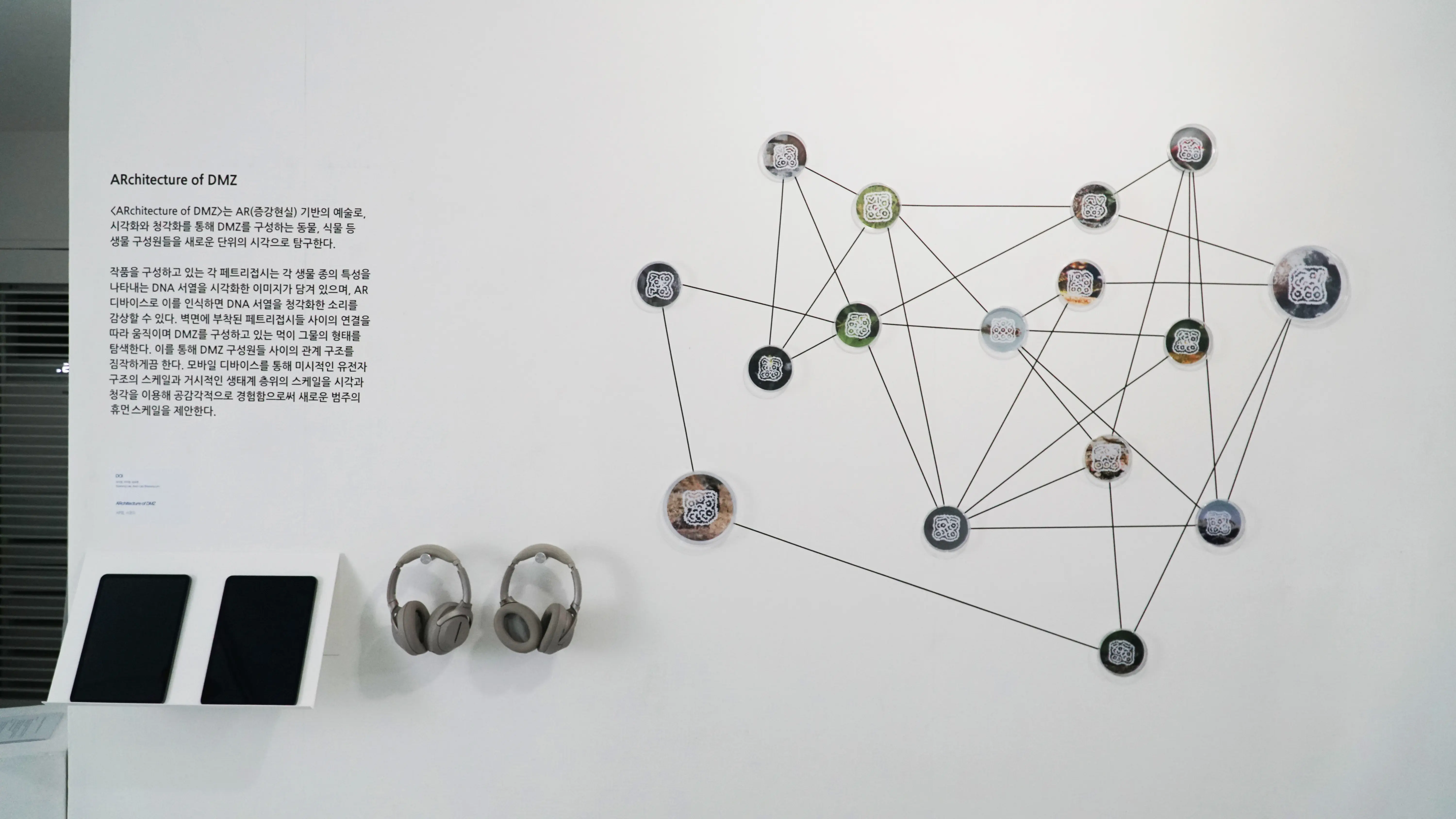
<ARchitecture of DMZ> is an AR installation designed to visualize and sonify the genetic information of flora and fauna in the DMZ using Augmented Reality technology, allowing the audience to directly explore the ecosystem's microscopic information and macroscopic structures through mobile devices.
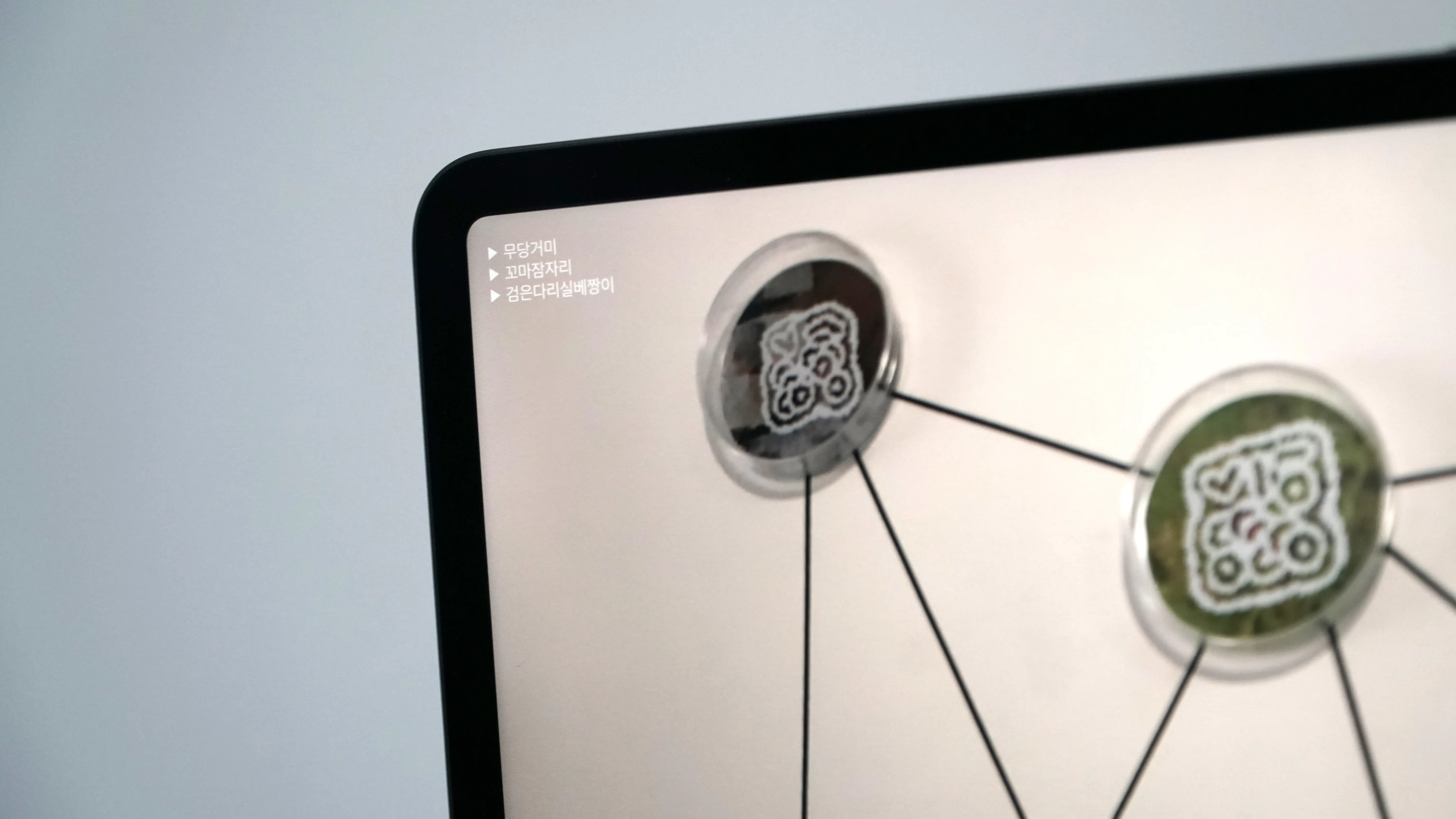
This work implements a sonification logic that analyzes and translates the DNA data of native DMZ species into sound, expanding this process into the physical space of the exhibition hall and personal mobile devices. The unique DNA sequences representing the characteristics of each species were visualized into graphics to create AR markers, which were then placed inside Petri dishes—tools typically used for cultivating life—and arranged on the wall. These Petri dishes are not isolated but intricately connected by lines representing the food web relationships of the DMZ ecosystem, forming a vast physical network. As viewers hold their mobile devices and physically follow these connecting lines to scan the dishes, they can hear the unique sounds derived from the DNA information of each species. In this way, the viewer's movement becomes an exploration following the flow of the ecosystem, creating a synesthetic structure where visually realized genetic information expands into an auditory experience through AR.
This approach permeates the core theme of 'Human Scale'. It aims to bridge two scales of the ecosystem that are difficult for humans to perceive intuitively—the microscopic scale of DNA structures invisible to the naked eye, and the macroscopic scale of the ecosystem's food web—allowing them to be experienced at eye level through the medium of AR. By sensing these contrasting worlds simultaneously through the familiar interface of a smartphone and inferring the relationship structures between the members, the audience gains a new perception of the invisible order of life and encounters a new category of Human Scale where technology, nature, and humanity are mediated.